
Summary
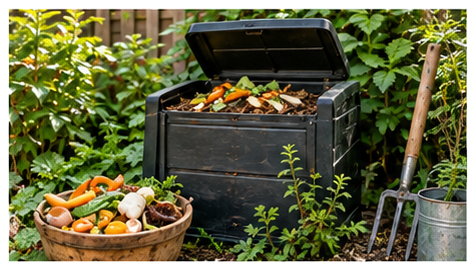
Home composting turns suitable kitchen and garden waste into a crumbly soil improver. The process works best when soft, nitrogen-rich materials are mixed with drier, carbon-rich materials and the pile has enough moisture and air. A simple bin or heap can work well if it is easy to reach, drains freely and is large enough for the amount of material your household actually produces.

About this article
How do you make compost at home? Combine varied plant-based materials, keep the mixture about as moist as a wrung-out sponge, and maintain airflow by mixing or turning material that becomes wet or compacted.
It explains where to put the compost, what to add, what to leave out, how to correct common moisture and airflow problems, and how to recognize finished compost.

How To Make Compost At Home
Choose a bin or heap that matches the amount of garden and kitchen material you produce. Leave enough room to add bulky material, mix the contents and remove finished compost from the bottom or front.
Start with a varied mixture rather than a single thick layer of one ingredient. Chop or break up coarse stems and woody prunings where practical because smaller pieces expose more surface to decomposers. Avoid compressing material firmly into the bin: air spaces are part of the process.
What To Put In A Home Compost Bin
A home compost bin can take vegetable and fruit peelings, coffee grounds, soft plant trimmings and modest amounts of fresh grass mixed with dry leaves, chopped stems, shredded plain paper and torn uncoated cardboard. These materials are often described as greens and browns: greener, softer material tends to supply more nitrogen, while drier, woody material supplies more carbon.
The practical aim is a varied, open mixture. If a bucket of wet kitchen scraps or grass goes in, mix it through with dry material rather than leaving a dense wet pocket. Keeping a bag or box of dry leaves or torn cardboard beside the bin makes this easy.
What Not To Put In A Garden Compost Bin
For an ordinary home garden compost system, leave out meat, fish, bones, dairy foods, cooking oils, greasy cooked food and dog or cat waste. Avoid chemically contaminated material, glossy or plastic-coated paper and packaging that only looks like paper.
Home heaps do not all reach temperatures high enough for the same length of time. For that reason, strongly diseased plants, invasive plants and weeds carrying mature seed may need another disposal route according to local guidance. Products labelled compostable may also require industrial composting conditions, so the label alone does not mean they will break down properly in a garden bin.
Where To Place A Home Compost Bin
A compost bin should be placed somewhere easy to reach in wet weather, with enough working space to add material, turn or mix it and remove finished compost. A sheltered position can reduce extreme drying and saturation, while direct contact with soil suits many open-bottom garden bins.
Keep drainage in mind. The site should not become waterlogged, and the bin should not block a drain, path or access point. Follow local rules where they affect food waste, invasive plants or compost systems.

How Wet Should Home Compost Be?
Home compost should be moist rather than dripping wet; a useful comparison is a wrung-out sponge. If the contents are dry and little is changing, add some water while mixing, especially after long dry weather or after adding a large amount of brown material.
If the compost is wet, slimy or sour-smelling, the mixture commonly needs more air and dry material. Break up compacted clumps, mix in torn cardboard, dry leaves or chopped woody material, and protect the heap from excessive rain. Thick masses of fresh grass are especially likely to mat together, so mix them with drier ingredients instead of adding a whole layer at once.
How To Keep Home Compost Aerated
Composting organisms need oxygen as well as organic matter and moisture. Turning or mixing brings air back into compacted material and moves outer material toward the more active centre. Turning more often can speed decomposition, but a passive bin can still work more slowly.
Smell is useful information. An earthy smell usually fits an aerated mixture; persistent sour or rotten smells point toward wet, compacted conditions that need correction rather than perfume, powders or another gadget.
How To Know When Compost Is Ready
Finished garden compost is dark, crumbly and earthy-smelling, and most of the original ingredients are no longer recognizable. Coarse pieces can be returned to the next batch.
Use mature home compost as a soil improver or mulch around established plants rather than assuming it is automatically a complete seed-sowing or container-growing medium. A second bin or separate holding area can make the routine easier: one batch can mature while fresh material goes into the other.
Sources & further reading
- Royal Horticultural Society — Composting — https://www.rhs.org.uk/soil-composts-mulches/composting
- University of Illinois Extension — Getting Started with Home Composting — https://extension.illinois.edu/composting/composting-homepage
- University of Illinois Extension — How It Works — https://extension.illinois.edu/composting/how-it-works
- University of Illinois Extension — Questions About Composting — https://extension.illinois.edu/composting/questions-about-composting