
Summary
A good bulb display is not one burst of colour in April. It is a sequence. Snowdrops, crocus and early daffodils can begin in late winter, tulips can carry the middle of spring, and alliums, camassias and Dutch iris can continue toward early summer. The practical task is to choose bulbs that flower at different times, match them to the right place, and plant them deeply enough in soil that drains well through winter.

About this article
When should you plant spring-flowering bulbs? In cool temperate climates, most are planted in autumn while dormant, but daffodils and many small bulbs usually go in earlier, while tulips are commonly planted later once the soil has cooled.
This guide turns autumn bulb planting into a simple seasonal plan for beds, grass and containers. It focuses on tulips, daffodils, crocus, alliums, camassias, muscari, scilla and other bulbs that can build a succession of flowers instead of a single short display.

Start With The Flowering Calendar, Not The Shopping List
The easiest way to plan spring bulbs is to work forward through the season. Snowdrops, winter aconites and some crocus can open first. Daffodils and more crocus follow. Tulips then provide the strongest range of colours and heights through early, mid and late spring. Alliums, camassias and Dutch iris can take over as tulips fade.
When To Plant Tulips, Daffodils And Alliums
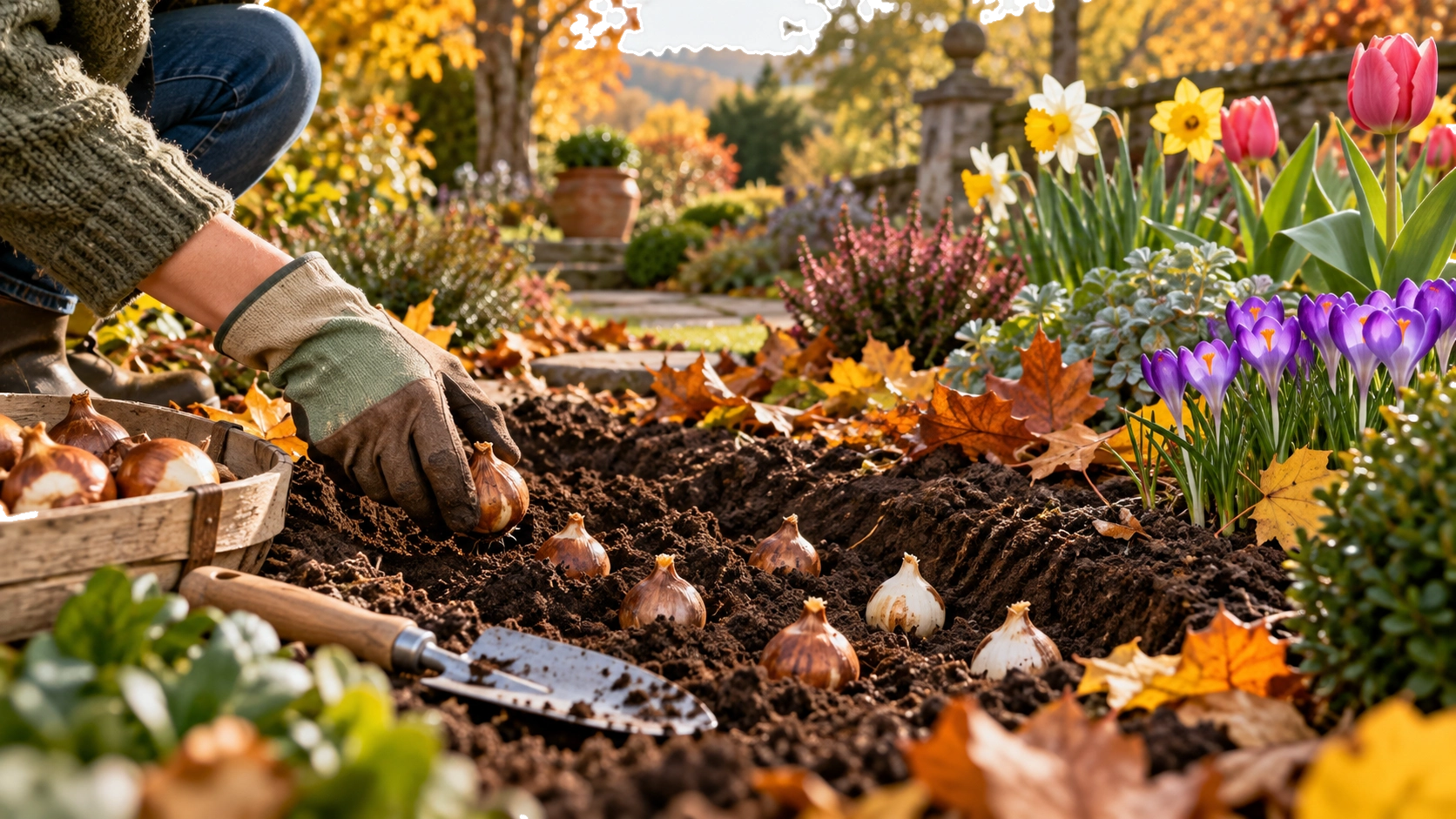
Tulip bulbs are normally planted in late autumn, often around November in UK-style conditions, in fertile, well-drained soil. Planting later gives them cooler soil and shortens the mild autumn period in which tulip fire can develop.
Daffodils are generally planted earlier, commonly from September into October, so roots can develop before winter. Alliums are also autumn-planted, often from September to November. Exact dates move with climate and altitude, so soil condition matters more than a fixed day on the calendar.
How To Choose Bulbs For Beds, Grass And Pots
Tall tulips and alliums work best where they can rise through lower plants, while narcissus and crocus are useful at the front of borders and around paths.
For naturalising in grass, choose bulbs that can return and multiply when the site suits them. Crocus, snowdrops, muscari and many daffodils are useful choices, but their foliage must be allowed to mature after flowering.
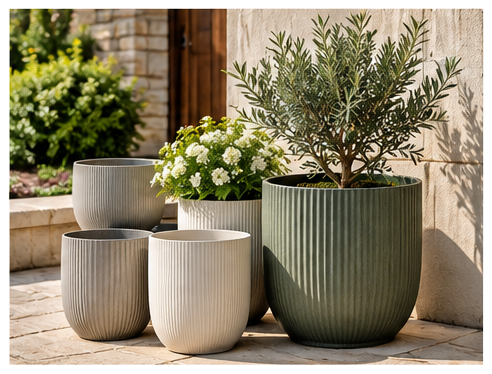
In pots, mature height matters as much as colour. Miniature narcissus, crocus and Iris reticulata suit smaller containers, while tall tulips and alliums need more soil volume and a stable pot.
How Deep To Plant Spring-Flowering Bulbs
A practical rule for many bulbs is to plant them at about two to three times the bulb's own height, measured from the base of the bulb to the soil surface. Large tulips and daffodils commonly sit around 10–15 cm deep, while large alliums may need 15–20 cm and small crocus or scilla much less.
Planting too shallowly can expose larger bulbs to temperature swings and disturbance, while forcing a bulb into compacted soil can damage the basal plate where roots emerge.

Drainage Is The Deciding Factor
Many spring bulbs tolerate winter cold better than prolonged waterlogging. Tulips and ornamental alliums are particularly suited to sunny, free-draining positions. Daffodils are more forgiving, but they also perform poorly in permanently saturated ground.
On heavy clay, improve the wider planting area rather than creating a small pocket that can fill with water. Raised beds, slight slopes and containers are useful alternatives where winter drainage is poor.
How To Build A Bulb Pot That Lasts Longer
A 25 cm pot can hold roughly ten standard tulip bulbs in a single display layer, depending on bulb size. For a longer season, use layers: place the deepest, largest bulbs first, cover with compost, then place smaller bulbs above without stacking them directly on top of the lower ones.
Choose bulbs with different flowering times but similar light and moisture needs. Keep the compost moist rather than saturated through winter, and make sure drainage holes remain open.
Which Bulbs Come Back Every Year
Daffodils, many alliums, crocus, snowdrops, muscari and scilla can return and multiply when their site suits them. Tulips are more variable: many large hybrid tulips give their strongest display in the first year, while species tulips and some Darwin Hybrid types are more dependable for repeat flowering in well-drained ground.
After flowering, leave healthy foliage until it yellows naturally so the bulb can rebuild reserves for the next season. Cutting green foliage too early reduces the energy available for future flowers.
Plan One Autumn, Then Let The Season Unfold
A strong planting plan can begin with snowdrops and early crocus, move into narcissus and hyacinths, stretch through early, mid and late tulips, and finish with alliums, camassias and Dutch iris.
Before ordering, note the light, drainage, available space, mature height and stated flowering month of each cultivar.
Sources & further reading
- Peter Nyssen — Autumn Planting Bulbs — https://www.peternyssen.com/autumn-planting.html
- Peter Nyssen — Help Me Choose Autumn Bulbs — https://www.peternyssen.com/autumn-planting/help-me-choose-autumn-bulbs
- Peter Nyssen — Alliums: The Complete Growing Guide — https://www.peternyssen.com/autumn-planting/alliums/guide.html
- Royal Horticultural Society — Choosing and Planting Bulbs in Autumn — https://www.rhs.org.uk/garden-inspiration/seasonal/choosing-and-planting-bulbs-in-autumn
- Royal Horticultural Society — Daffodils — https://www.rhs.org.uk/plants/daffodils