
Summary
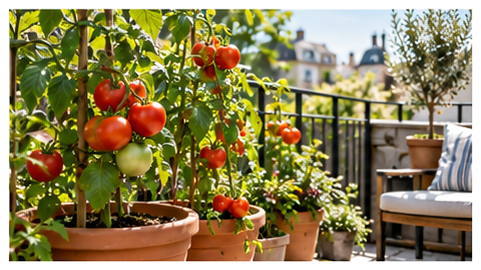
Choose a suitable variety, give its roots enough room and make regular watering easier before the first fruit forms.
Look for a compact or bush tomato if you have limited height and prefer less training. Cordon tomatoes need a support and different pruning: do not remove every side shoot from a bush variety.

Match the variety
to your space
Look for a compact or bush tomato if you have limited height and prefer less training. Cordon tomatoes need a support and different pruning: do not remove every side shoot from a bush variety. Choose seed or plants labelled for your growing conditions. Outdoor planting depends on local frost risk and weather, not a single date for all of Europe.
Set up a stable container
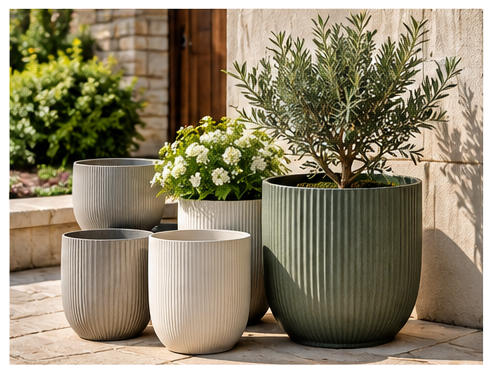
Use a substantial pot with drainage holes, fresh suitable growing medium and space below the rim for watering. As a practical starting point, many single patio plants benefit from around 20–30 litres, while vigorous varieties may need more; follow the supplier's variety guidance. Check the weight of the filled, watered container and secure supports without attaching unsafe loads to a railing.
Plant and acclimatise
carefully
Gradually introduce protected young plants to outdoor light, wind and temperatures before leaving them outside. Place the support early so you do not damage an established root system later. Water after planting and check that excess water can escape. A sheltered, sunny position usually works better than a windy exposed edge.
Keep water and
feeding consistent
Check the growing medium below its surface. Water when needed, wetting the root zone rather than repeatedly splashing leaves. Containers can dry quickly in warm wind. Feed according to the product label and crop stage; more fertiliser is not a substitute for adequate water. Avoid letting the pot alternate between severe drought and saturation.
Observe before treating
Inspect leaf undersides and new growth regularly. Distorted leaves, yellowing and poor fruit can have several causes, so check moisture, roots and exposure before buying a treatment. Remove badly affected material appropriately and improve spacing where foliage stays crowded. Never use a pesticide on an edible crop unless its local label explicitly permits that use.
Harvest and improve
next season
Pick ripe fruit gently and support heavy trusses if necessary. Record the variety, pot size and whether watering became difficult. A smaller crop that tastes good and fits your routine is more useful than an oversized plant you cannot keep watered. Clean containers and supports before reusing them.