
Summary
Turn suitable plant waste into a useful soil improver by managing air, moisture and a varied mix of materials.
Choose somewhere you can reach in wet weather, with enough room to remove finished material. A sheltered position helps avoid extremes of drying and soaking.

Give the bin an
accessible home
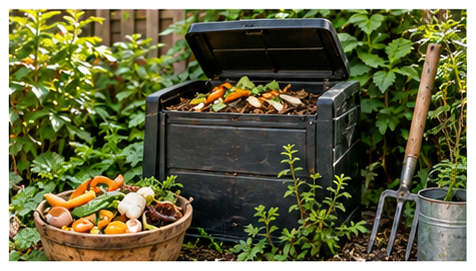
Choose somewhere you can reach in wet weather, with enough room to remove finished material. A sheltered position helps avoid extremes of drying and soaking. A bin contains the material neatly, but an expensive rotating system is not essential. Think about the volume of waste your household actually produces before choosing its size.
Mix soft and dry ingredients
Combine vegetable peelings, fresh plant trimmings and small amounts of grass with dry leaves, shredded plain cardboard or chopped woody material. Break up dense clumps. Avoid filling a bin entirely with wet grass, which can form a compact mat. Keep a small supply of dry material nearby so every kitchen-waste addition can be mixed rather than buried in a slimy pocket.
Diagnose with your senses
Lift a small handful with gloves: the mixture should feel damp without dripping. A dry, unchanged heap needs moisture and mixing; a sour, wet heap generally needs more airy dry material and a turn. Do not expect every small domestic bin to heat strongly. Cooler composting can still work, but it takes longer and may not reliably destroy weed seeds.
Keep unsuitable waste out
Do not add pet faeces, meat, fish, oily cooked food or materials contaminated with chemicals to a basic garden bin. Follow local collection guidance for invasive plants and badly diseased material. Avoid plastic-coated packaging even when it resembles paper. Products marked compostable may require industrial conditions rather than a home heap.
Know when to use it
Finished compost should be crumbly and earthy, with most original ingredients no longer recognisable. Return coarse pieces to the next batch. Spread mature compost around established plants without piling it against stems. It is a soil improver, not automatically a complete seed-sowing or container-growing medium; seedlings need an appropriate mix.
Make the routine sustainable
Store a small covered kitchen caddy, empty it regularly and mix additions when you visit the bin. If smells appear, correct the conditions rather than covering them with another product. Keep a second container or bay if space permits, allowing one batch to mature while you fill the other.