
Summary
Prepare a watering routine that can survive changing weather, blocked drippers and an unexpected empty battery.
Group containers with similar requirements and remove unnecessary exposure where plants can tolerate a temporary move. Do not move sun-loving plants into deep shade for weeks.

Reduce the number
of different needs
Group containers with similar requirements and remove unnecessary exposure where plants can tolerate a temporary move. Do not move sun-loving plants into deep shade for weeks. Harvest ripe crops and remove dead material before leaving, but avoid heavy pruning or a sudden feeding change immediately before an absence.
Choose a compatible timer
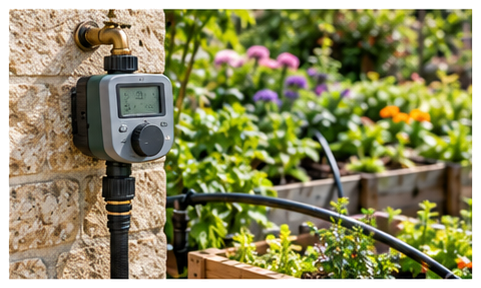
Check tap threads, water pressure, flow requirements and weather resistance. Some valves need mains pressure and will not operate from a low tank. If using a reservoir, calculate how long it will last under the planned schedule and leave a sensible margin. Check the device's instructions for backflow protection and winter storage.
Measure the output
Place outlets in measuring containers during a trial run. Compare delivery and inspect for leaks. Then reconnect them to the plants and check the growing medium after watering. A timer set to ten minutes can deliver very different volumes through different systems; duration alone tells you little.
Adjust for real conditions
Observe the setup over several days, including a warm day if possible. Small pots, wind and vigorous growth can increase demand. A rain sensor may reduce unnecessary outdoor watering but cannot judge moisture in every sheltered pot. Keep plants with unusual requirements separate rather than overwatering everything to protect one thirsty container.
Plan for failure
Use fresh appropriate batteries when needed, clean the filter and secure tubes. Ask someone to inspect the garden during longer absences and give them a clear watering note. Mark the shut-off valve. A trusted person is especially valuable when a leak could affect neighbours or a reservoir failure would leave valuable plants dry.
Review when you return
Look for uneven growth or persistent wet spots and adjust the layout. Clean and store equipment as instructed. A successful holiday system can become part of your normal routine, but keep checking it: automatic watering still needs seasonal adjustments and occasional maintenance.