
Summary
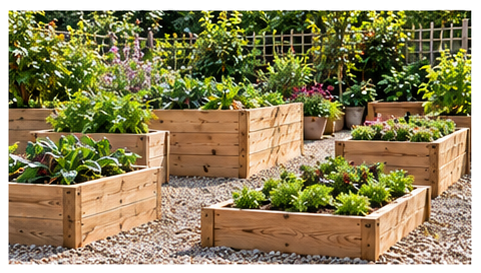
Start with reach and access, then calculate the soil volume before choosing a raised-bed kit.
Mark the proposed outline with string. Kneel, stand or sit in the position you will use for gardening, and check whether you can reach the middle without stepping inside.

Test your reach on the ground
Mark the proposed outline with string. Kneel, stand or sit in the position you will use for gardening, and check whether you can reach the middle without stepping inside. Around 1–1.2 metres can work when a bed is accessible from both sides, but a bed against a wall should be narrower. Your comfortable reach matters more than a standard size.
Leave genuinely usable paths
Allow room to turn with a watering can, move a barrow and kneel without crushing neighbouring plants. If using a wheelchair or walking aid, test the actual turning space and working position before buying. Several narrow beds with awkward passages can be less useful than one well-placed bed. Keep access to taps, drains and building maintenance clear.
Separate height
from growing depth
Tall sides can reduce bending, but they also increase material, water and filling costs. The usable root depth depends on both the bed and the ground below it. An open-bottom bed on clean soil is different from a sealed planter on paving. On terraces, obtain appropriate load advice before adding heavy wet soil.
Calculate what you need
For a rectangular bed, multiply internal length by width by fill depth, all in metres. A 1.2 × 2 × 0.3 metre bed holds about 0.72 cubic metres, or 720 litres, before allowing for settling and anything already in it. That is a substantial delivery; confirm access and storage before ordering. Do not assume a few small bags will be enough.
Choose the fill
for the situation
For an open-ground bed, a suitable topsoil and mature organic matter blend can be practical. Raised containers with a base need an appropriate growing medium and drainage design. Avoid filling the entire bed with fresh manure or unfinished compost. Remove persistent weeds first and keep drainage routes open.
Plan the first crop simply
Group crops with compatible watering needs, give climbing plants a secure support and position taller growth so it does not shade everything else. Keep labels and a planting sketch. Before buying extras, use the bed for one season: covers, irrigation and trellises should solve a real difficulty rather than clutter your access.