Summary
Use a garden visit in Vienna to notice scale, framed views and the relationship between planting and architecture.
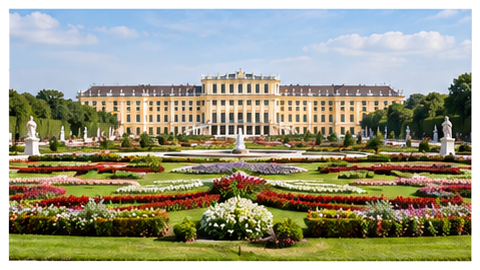
Schönbrunn's palace and gardens form a UNESCO World Heritage property. Rather than trying to photograph everything immediately, pause where you can understand the relationship between the palace, formal garden and rising landscape.
Begin with the
overall composition
Schönbrunn's palace and gardens form a UNESCO World Heritage property. Rather than trying to photograph everything immediately, pause where you can understand the relationship between the palace, formal garden and rising landscape. Notice how a long view draws your eye and how repeated planting gives a large space a readable structure.
Look at transitions
A memorable garden is not only its grand centre. Pay attention to changes from open areas to shaded walks, from formal planting to quieter edges and from wide views to enclosed spaces. Ask where you naturally slow down and why. These observations are more useful for a home garden than copying a palace-sized feature.
Borrow proportion,
not monumentality
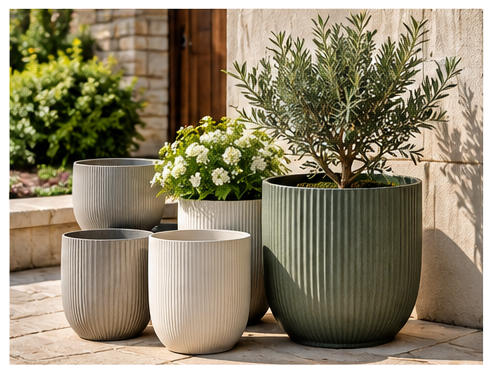
At home, a straight path can frame a pot, seat or small tree instead of a distant building. Repeated plants can connect separate beds. Before adding symmetry, check whether your entrance and paths actually support it; forcing a formal axis into an awkward space can make movement less comfortable.
Plan the visit from
official information
Check the official Schönbrunn website for the date you intend to visit, including garden access, separately ticketed attractions, opening times and accessibility. Do not assume a palace ticket covers every garden feature. Allow time for the distances involved and choose footwear for an outdoor walk; weather can change the experience substantially.
Keep a focused notebook
Choose three things to record: a view, a planting rhythm and a practical detail such as edging or seating. Sketch rough proportions rather than measuring historic features. Photograph labels when permitted so plant names can be checked later. Respect barriers and other visitors, particularly when stopping on narrow routes.
Translate the experience
into one change
After returning, choose a modest improvement: repeat one plant, simplify a path edge or place a seat where it catches a view. Test the idea with temporary markers before construction. The value of visiting a great garden lies in learning to notice relationships, not in recreating its expense or scale.