
Summary
The Summer Palace in Beijing offers a different way to think about water, views and the movement between buildings and landscape.
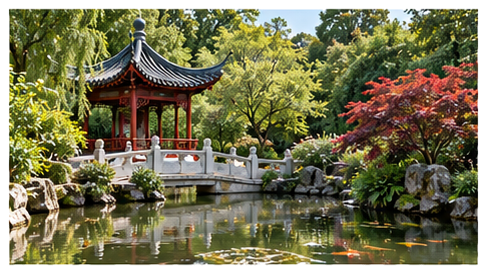
UNESCO describes the Summer Palace as an imperial garden combining hills, water and built features. It is a specific historic landscape with cultural meaning, not a collection of ornaments to copy.

Understand the place
before borrowing ideas
UNESCO describes the Summer Palace as an imperial garden combining hills, water and built features. It is a specific historic landscape with cultural meaning, not a collection of ornaments to copy. Begin by learning its context and looking at how its elements relate to one another rather than treating every bridge or pavilion as a decorative object.
Observe water as space
Water can create visual breathing room and reflect changing light. In a home garden, that lesson does not require a large pond. An uncluttered planted area or a calm surface can also give the eye a resting place. If adding water, consider child safety, maintenance, water use and local conditions before choosing a feature.
Notice framed and
changing views
Move slowly and observe how a view changes as you turn or pass a structure. A home garden can use the same general principle through a doorway, trellis opening or carefully placed shrub. Avoid blocking essential light or circulation merely to manufacture mystery. A revealed view should reward movement without making the space awkward.
Connect shelter
and outdoor life
Covered or shaded places can help people linger in a garden. At home, choose a seat with a useful outlook and the shade appropriate to your climate. The relationship between sitting, walking and looking often matters more than elaborate construction. Check permission and structural requirements before adding permanent overhead structures.
Prepare for a real visit
Consult the official site and current local visitor information for opening arrangements, entry requirements, routes and accessibility. Do not rely on old blog prices or assume every historic building is accessible. Plan for outdoor distances and seasonal weather, and respect site rules when photographing or moving through busy areas.
Adapt with respect
Use the visit as an invitation to simplify a view or improve the relationship between a path and a seat. Avoid presenting a generic decorative object as an authentic reconstruction. A successful small garden can learn from a historic place while remaining honest about its own setting, materials and purpose.