
Summary
Use a few well-chosen containers to give structure without blocking movement or creating an unmanageable watering task.
Mark the footprint of the pot and the mature plant above it. Open nearby doors fully and allow room to carry shopping or move outdoor furniture. Entrances need usable clearance, not just a symmetrical photograph.
Measure the empty space first
Mark the footprint of the pot and the mature plant above it. Open nearby doors fully and allow room to carry shopping or move outdoor furniture. Entrances need usable clearance, not just a symmetrical photograph. On raised terraces and balconies, check permitted loads before adding large containers filled with wet growing medium.
Compare materials honestly
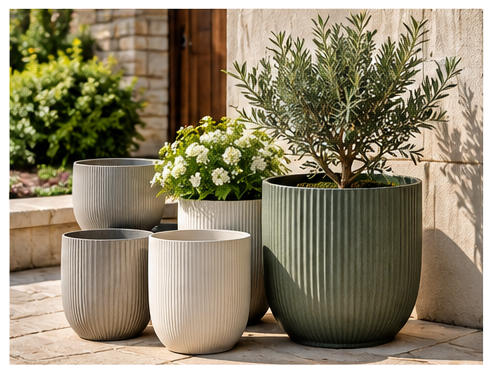
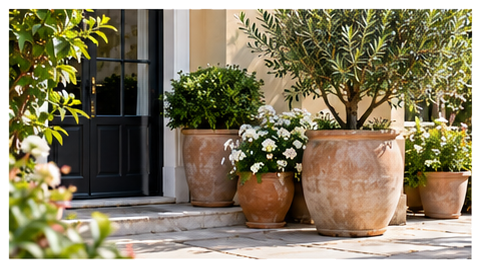
Terracotta has a traditional appearance and may dry relatively quickly; check its frost rating. Plastic and composite containers are often lighter, though quality and durability vary. Metal can become hot in sun, while stone and concrete can be difficult to move. Ask about weather suitability and handles rather than judging material by appearance alone.
Make drainage accessible
Confirm drainage holes are present and unblocked. Use appropriate feet where they help keep outlets clear, following the pot's design. Do not assume a deep layer of stones fixes poor drainage; it also uses root space and adds weight. Water must have a safe route away without continually soaking walls or neighbouring property.

Choose a plant that can stay
Match the plant's mature size, hardiness and root needs to the container. A tree in a pot requires ongoing water, feeding and eventual root or container management. For a simpler display, combine compatible seasonal plants or use one suitable shrub with room to grow. Avoid mixing plants with sharply different watering requirements.
Design with repetition
A pair at an entrance or a small group using one material can look settled without many decorations. Vary height through planting rather than unstable stacks. Keep the largest pot visually connected to the doorway, bench or wall it accompanies. Leave enough access to remove fallen leaves and inspect the surface.
Budget for care and movement
Position a heavy pot before filling it and use appropriate moving equipment if required. Allow a watering lip, check moisture regularly and follow plant-specific feeding guidance. Before winter, check drainage and protect plants or pots that are not hardy in your climate. The best statement container is one you can maintain safely.