
Summary
A reservoir can make watering easier, provided the plant, growing mix and planter are compatible.
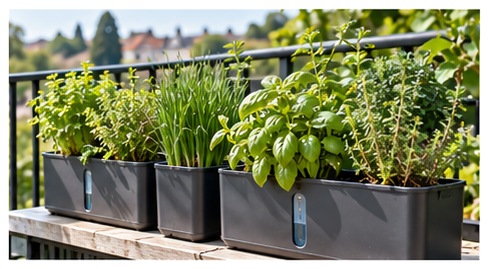
Most systems hold water below the growing medium and move it upwards through a wick or a designed contact zone. Look for a visible fill point, a clear overflow and instructions for the recommended mix.

Learn how the planter works
Most systems hold water below the growing medium and move it upwards through a wick or a designed contact zone. Look for a visible fill point, a clear overflow and instructions for the recommended mix. An ordinary sealed decorative pot is not a self-watering system: without a safe overflow it can become waterlogged.
Match herbs to moisture
Basil and some leafy herbs can suit consistent moisture during active growth. Rosemary, thyme and other plants adapted to drier conditions may need a different arrangement and especially free drainage. Do not combine every herb in one reservoir simply because all are culinary plants. Group by growing requirements first.
Establish roots before
relying on the tank
Follow the planter instructions after planting; young roots may initially need watering from above. Use the specified medium so capillary movement can work. Check moisture around the root ball rather than assuming a full indicator means the plant can access water. Let the overflow remain open outdoors.

Observe in heat and rain
Reservoir capacity is finite. Sun, wind and large plants can empty it quickly, while persistent rain can keep the mix too wet in a poorly designed container. Inspect the overflow for blockages and ensure runoff is acceptable on your balcony. Do not advertise a fixed number of unattended days to yourself before testing the actual setup.
Feed and clean thoughtfully
Use fertiliser according to its label and the planter guidance; avoid adding an arbitrary strong solution to the reservoir. At the end of a crop, empty and clean accessible parts and examine the wick. Avoid leaving stagnant open water accessible to insects. Replace components when wear prevents consistent delivery.
Decide whether it
solves your problem
A reservoir is useful when daily watering is inconvenient, but it is not maintenance-free. If you grow only a few drought-tolerant herbs, an ordinary draining pot may be simpler. Choose a system whose indicator, overflow and interior can be inspected without dismantling the entire planted display.